Milwaukee’s Pothole Season Never Ended: 5 Signs Your Suspension Took Damage You Didn’t Notice
Milwaukee potholes can deliver more than one sharp jolt. Sometimes, your car appears fine after the impact, but hidden damage continues developing beneath the surface. Weeks or months later, you may notice a vibration, a crooked steering wheel, or tires wearing faster than expected.
That delay makes pothole damage easy to dismiss. Here’s the thing: your suspension works as a system. A damaged strut, bent tie rod, or shifted alignment angle can affect handling, tire life, braking performance, and driving comfort long after the original impact.
Think of suspension maintenance like a routine medical check-up. You may feel healthy today, but a professional inspection can identify a small issue before it becomes a larger and more expensive problem.
If you recently hit a pothole: or your vehicle simply does not feel quite right: these five warning signs deserve your attention.
1. Your Strut Is Leaking or Your Ride Feels Different
Your shocks and struts control how your vehicle responds when the wheels move over bumps. They help keep the tires in contact with the road while limiting excessive bouncing and body movement.
A hard pothole impact can damage a strut seal or housing. The damage may not be obvious immediately. Over time, suspension fluid can begin leaking down the side of the strut. You may also notice that your vehicle:
- Bounces more than it used to after a bump
- Feels unusually soft, harsh, or unsettled
- Sways more during turns
- Dips excessively when braking
- Scrapes or bottoms out over uneven pavement
- Makes a clunking sound over bumps
A small amount of surface moisture may not always indicate a failed component, so avoid diagnosing the issue based only on what you see. A trained technician can inspect the strut, mounting hardware, spring, and surrounding components to determine whether replacement is necessary.
Driving with a weak or damaged strut can reduce stability and accelerate tire wear. Early suspension repair in Milwaukee can help prevent a single damaged component from creating several additional problems.
2. Your Tires Are Wearing Unevenly
Uneven tire wear is one of the most useful clues that pothole damage may have affected your suspension or alignment. Run your hand carefully across the tread: when the tire is parked and safe to inspect: and look for wear that is concentrated on one edge or appears rough and scalloped.
Common patterns include:
- Excessive wear on the inside or outside edge
- Cupping or dipping across the tread
- One tire wearing faster than the others
- Feathered tread blocks that feel smooth in one direction and sharp in the other
- Repeated loss of air from one tire
A pothole can knock the wheels out of alignment, bend a wheel, damage a tire’s internal structure, or loosen a suspension component. The result is often uneven contact with the road.
Keep in mind that incorrect tire pressure and missed tire rotations can also cause irregular wear. That is why a professional inspection matters. At Sanfelippo Auto Repair, our technicians can assess the tires, wheel condition, suspension parts, and alignment angles together instead of treating only the most visible symptom.
Replacing tires without correcting the underlying issue may leave you with the same problem a few thousand miles later.
3. Your Vehicle Pulls or Alignment Drift Gets Worse
Does your car slowly move toward the curb when you relax your grip on the steering wheel? Does it require constant correction on a straight Milwaukee road? Those behaviors may point to alignment drift.
A pothole can change the relationship between your wheels and suspension components. It may bend or shift a tie rod, control arm, steering part, or other component. Even a small change in alignment can affect how your vehicle tracks.
Your car may:
- Pull left or right
- Wander instead of holding a straight line
- Feel unstable at highway speeds
- Require more steering input than before
- Handle differently on familiar roads
Road crown, tire pressure, and wind can also make a vehicle feel like it is pulling. However, a sudden change after a pothole should not be ignored.
An alignment service can measure the wheel angles against manufacturer specifications. If the angles cannot be corrected through adjustment, that may indicate a bent or worn part that needs attention first. This distinction is important: an alignment cannot repair a damaged control arm or tie rod.
A thorough vehicle diagnostics Milwaukee inspection can help identify whether the cause is alignment-related, tire-related, or mechanical.
4. Your Steering Wheel Is Off-Center
You may be driving straight, yet your steering wheel now sits noticeably tilted. This is a classic sign that something changed in your vehicle’s steering or alignment system.
An off-center wheel can develop after a pothole impact even when the car does not pull dramatically. The front wheels may still point in a direction that keeps the vehicle moving forward, but the steering wheel position tells you that the system is no longer centered correctly.
This problem matters for more than appearance. An off-center steering wheel can be associated with:
- Incorrect toe alignment
- A bent tie rod
- A shifted control arm
- Worn steering or suspension bushings
- A steering wheel that was not centered correctly during a previous alignment
The best solution is not to force the steering wheel back into place or simply accept the change. A technician should inspect the steering and suspension components, measure alignment, and verify that the steering wheel is properly centered after repairs.
If steering feels loose, the vehicle pulls sharply, or you hear grinding or heavy clunking, do not continue driving normally. Arrange a prompt inspection and ask about towing if the vehicle feels unsafe.
5. You Feel Vibrations That Were Not There Before
New vibration is another common sign of pothole damage. The location and speed of the vibration can provide useful clues, but it still requires a professional diagnosis.
For example:
- Steering-wheel vibration may be linked to a front wheel, tire, or alignment problem.
- Seat or floor vibration may point toward a rear wheel or tire issue.
- Vibration that increases with speed may involve wheel balance, wheel damage, or tire construction.
- A vibration that appears primarily while braking may involve the brake system rather than the suspension.
- A thump or rhythmic shake may indicate a tire with internal damage or a bent wheel.
A tire can suffer internal belt damage without showing an obvious puncture. A wheel can also bend on the inside where you cannot easily see it. That is why simply checking the visible outer rim may not tell the full story.

How Sanfelippo Auto Repair Finds Hidden Pothole Damage
When you bring your vehicle to Sanfelippo Auto Repair, we start by listening to what you noticed. When did the symptom begin? Does it occur at a certain speed? Did it appear after a pothole, curb impact, or tire replacement?
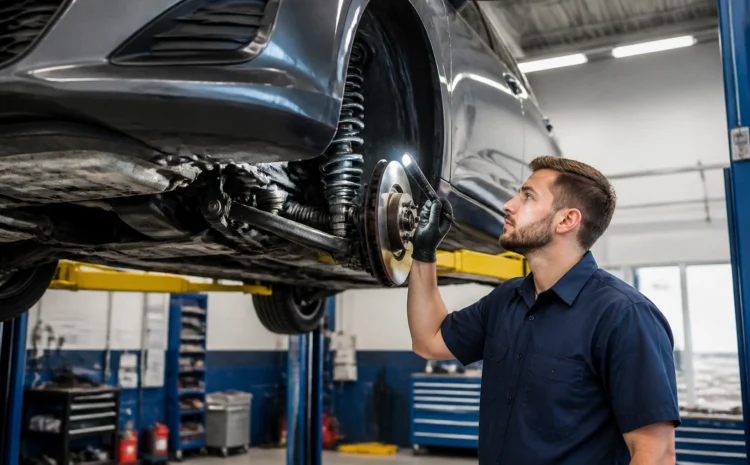
Then, our ASE-certified technicians use the latest diagnostic technology and hands-on inspection methods to evaluate the complete system. Depending on your symptoms, that may include checking:
- Struts, shocks, springs, and mounts
- Ball joints, tie rods, and control arms
- Sway-bar links and bushings
- Tire tread and sidewall condition
- Wheel balance and wheel runout
- Alignment angles
- Steering response and suspension movement
- Undercarriage components for scrapes, dents, or leaks
We explain what we find in clear language and separate urgent repairs from items that can be monitored. You receive honest recommendations: not a list of unnecessary services.
Our suspension and steering repair services are designed to restore stability, comfort, and control. If tire wear or steering position suggests an alignment problem, our tire and wheel alignment services can help address the issue at its source.
Early Detection Protects Your Safety and Your Budget
Let’s face it: postponing a small suspension inspection can feel like a way to save money. But if a damaged strut causes uneven tire wear, or a bent steering part causes repeated alignment problems, the eventual repair may cost more.
Early diagnosis can help you:
- Prevent premature tire replacement
- Protect other suspension and steering components
- Restore predictable handling
- Improve ride comfort
- Reduce the chance of a roadside failure
- Make informed repair decisions
If you want dependable auto repair in Milwaukee, Sanfelippo Auto Repair brings more than 30 years of experience, dealership-quality capabilities, and a family-owned approach to every inspection. We service all makes and models, from daily-driver sedans and SUVs to European vehicles and specialty cars.
What You Should Do After a Pothole Impact
If your vehicle feels normal, check the tire pressure and inspect the tires for bulges, cuts, or visible damage. Pay attention to changes over the next several drives.
If you notice pulling, vibration, uneven wear, an off-center steering wheel, or a rougher ride, schedule an inspection instead of waiting for the symptom to worsen. If steering becomes difficult, the car pulls severely, a tire develops a bulge, or you hear grinding, stop driving and seek professional assistance.
You can also document the pothole and any visible vehicle damage. Milwaukee residents can report road hazards through the City of Milwaukee pothole reporting page. Keep photos, repair estimates, invoices, and towing records if you plan to investigate possible reimbursement.
Does your steering wheel sit differently than it did before winter? Are your tires wearing unevenly? Have you felt a new vibration that you cannot explain?
Schedule a professional inspection with Sanfelippo Auto Repair or request an appointment. Our team will help you understand what happened, what needs attention, and how to get back on Milwaukee roads with confidence.