
Why Your Brakes Feel Different in Cold Weather (and When to Get Them Checked)
It happens on the first really cold morning of the season. You back out of the driveway, touch the brake pedal, and something feels off. The pedal is firmer than usual. The car grabs harder than you expected at the end of the stop. Or there is a faint squeal for the first few blocks that disappears once you have driven a bit.
Most of the time, none of that means your brakes are failing. Cold weather changes how the whole system behaves, from the fluid in the lines to the metal of the rotors to the grip of your tires on a frosty road.
But some cold-weather brake changes are not normal, and those are the ones that matter. Let’s break down what cold weather actually does to your brakes, which symptoms are harmless, and which ones mean it is time for an inspection.
Why Cold Weather Changes the Way Your Brakes Feel
Your braking system is a chain of parts working together: brake pedal, master cylinder, brake fluid, lines and hoses, calipers, pads, and rotors. Every link in that chain responds to temperature.
Here is what changes when the thermometer drops.
1. Cold pads and rotors need a little heat to work at their best
Brake pads are designed to operate in a temperature window. When they are cold, the friction material is harder and less compliant. The first few stops of the day can feel grabby, slightly noisy, or less progressive than they do after ten minutes of driving.
This is normal. As the pads and rotors warm up through use, the pedal feel smooths out and the noise usually fades.
2. Overnight moisture leaves a light film of surface rust on the rotors
Bare cast-iron rotors rust almost immediately when the air is damp or when the temperature swings from above freezing during the day to below freezing at night. That thin orange film is cosmetic, not structural.
You will often hear a light grinding or scraping for the first few stops as the pads wipe that film off the rotor face. Once the rust is gone, the noise goes with it.
What is not normal is grinding that continues after several stops, or a rotor that looks deeply pitted or flaking rather than lightly rusted.
3. Brake fluid gets thicker and rubber parts get stiffer
Brake fluid absorbs moisture from the air over time. Cold temperatures thicken fluid that is old or contaminated, and cold makes rubber brake hoses and caliper seals less flexible.
The result can be a pedal that feels slightly firmer, slower to return, or less smooth on the first few presses. If the pedal stays firm or feels wooden well after the car has warmed up, that is worth checking, because it can point to a fluid or hydraulic issue rather than plain cold.
4. Your tires lose grip too, which changes stopping distance
This one is easy to overlook. Even with perfect brakes, your car stops because your tires grip the road. Tire rubber stiffens in cold weather, and summer or worn all-season tires lose grip as temperatures drop.
So the longer stopping distance you notice on a cold morning is often a tire story as much as a brake story. Add frost, salt grit, or a little black ice and the difference becomes obvious.
5. Salt, sand, and grit collect around the components
Milwaukee winters put a lot of salt and sand on the roads. Some of it ends up inside the wheels and around the calipers, slide pins, and rotor edges. Grit can make brakes drag, squeal, or feel uneven for a short time, and over a whole season it can accelerate wear on components that do not get cleaned or inspected.
What Is Normal in Cold Weather (and What Is Not)
Here is the practical part. Most cold-morning brake symptoms settle down within a few minutes of driving. The list below helps you sort the harmless from the urgent.
Usually normal:
- A faint squeal or light scrape for the first few stops of the day
- A pedal that feels slightly firmer until the car warms up
- Stronger initial bite when the pads are cold
- Surface rust visible on the rotor face after a damp night
- A little noise after the car has sat through rain, snow, or a car wash
Get it inspected:
- Grinding that continues after several stops, or a metal-on-metal sound
- A pedal that sinks toward the floor, feels spongy, or needs pumping to stop
- The car pulling to one side under braking
- Vibration or pulsation through the pedal or steering wheel while braking
- A burning smell after normal driving
- A brake warning light on the dashboard
- Stopping distance that stays longer than usual once the car is warm
- Any change that gets worse over a few days rather than settling down

5 Questions That Tell You It Is Time for a Brake Inspection
Think of your brakes the way you think of a routine check-up. You do not wait until something hurts to book the appointment, because small findings are cheaper and easier to fix than emergencies.
Ask yourself these five questions:
- Has it been more than a year since your last brake inspection? Annual checks catch pad wear and fluid condition before they become repairs.
- Do you hear noise that lasts past the first few stops? Noise that stays is a signal, not a quirk.
- Does the pedal feel different than it did last winter? A change from your own baseline is the most useful data point you have.
- Are you still on the same brake fluid from years ago? Fluid absorbs moisture over time, and that affects both performance and the health of internal components.
- Do your tires match the season? If you are heading into winter on worn all-seasons, your brakes are working with less grip than they were designed for.
If you answered yes to any of those, a proper inspection is a short, inexpensive appointment. If you answered yes to two or more, book it before the first hard freeze rather than after.
How a Professional Brake Inspection Works
A real inspection is more than a glance through the wheel spokes. At a minimum, a technician should check:
- Brake pad thickness and even wear side to side
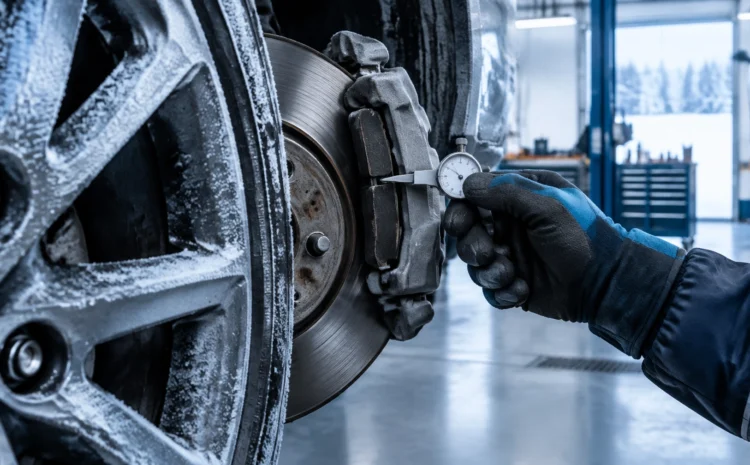
- Rotor condition: thickness, scoring, heat spots, and pitting
- Caliper operation, including slide pins and pistons
- Brake fluid level, condition, and moisture content
- Brake lines and hoses for cracks, bulging, or corrosion
- Parking brake operation
- Tire condition and pressure, since grip is part of stopping safely
That last point is why we look at the whole picture instead of just the pads. A brake complaint on a cold morning is sometimes a tire problem, a fluid problem, or a corroded line, and guessing at parts is exactly how people end up paying for repairs they did not need.
Honest Brake Service in Milwaukee, WI
Cold weather does not have to make you second-guess every stop. Most of what you feel in late October and November is normal seasonal behavior. The rest is your car telling you it needs attention, and it is far better to hear that in a shop than on the road.
At Sanfelippo Auto Repair, our ASE-certified technicians inspect and repair brake pads, rotors, calipers, brake fluid, and brake lines for all makes and models. We are a family-owned shop with more than 30 years of experience in the industry, which means dealership-level capability with a personal approach and competitive pricing. We explain what we find, show you what we see, and recommend only the work your vehicle actually needs.
Here is the thing: brakes are not a place for guesswork, and they are not a place to be sold parts you do not need either. You deserve a clear answer either way.
Are your brakes ready for winter driving?
- Do your brakes sound different than they did a month ago?
- Has it been more than a year since your last brake inspection?
- Is your pedal softer, firmer, or slower to return than you remember?
- Do you feel a pulse or pull when you brake?
- Are you heading into winter on tires you already know are worn?
If any of those hit home, schedule a brake inspection now, while it is a quick appointment instead of an emergency. Call Sanfelippo Auto Repair at 414-710-3282, book online, or read more about our brake services in Milwaukee, WI. We are at 646 S 2nd St UNIT 600, Milwaukee, WI 53204, serving Milwaukee, WI and surrounding areas.