
Road Salt Is Quietly Eating Your Car: How to Protect Your Undercarriage from Milwaukee Winters
In winter, road salt helps make driving conditions safer. But the same salt and de-icing brine can cling to your vehicle long after the roads look clear. Underneath your car, that residue can start corrosion in places you can’t easily see. Sometimes until a small problem becomes an expensive repair.
Think of an undercarriage inspection like a routine medical check-up: catching a concern early can help you avoid a more serious issue later. Here’s what Milwaukee drivers should know about salt damage, how to reduce buildup, and when to ask a professional to take a closer look.
1. Why winter road salt puts your undercarriage at risk
Salt and brine help reduce ice on winter roads, but they also leave chloride residue behind. When that residue mixes with moisture, it can accelerate rust on exposed metal. Slush can carry it into wheel wells and onto the underside of your vehicle, where it may remain trapped around seams, brackets, and other hard-to-see areas.
The risk isn’t limited to older cars. Any vehicle driven on treated roads can collect salt, and repeated winter exposure gives corrosion more opportunities to develop.
2. What road salt can damage beneath your car
The undercarriage is a network of parts working together. Corrosion in a less visible area can affect safety, reliability, or the cost of future repairs.
- Brake lines: Rust can weaken metal lines that carry brake fluid. Severe corrosion or a leak can interfere with braking, making this a safety issue, not just a cosmetic concern.
- Fuel lines and tank components: Metal lines, fittings, and, on some vehicles, other fuel-system components can corrode. A fuel smell or visible leak needs prompt attention.
- Frame and structural areas: Rust can spread across exposed metal, seams, and mounting points. Serious structural corrosion requires professional assessment.
- Exhaust components: Pipes, joints, and mufflers are exposed to moisture and road residue. Corrosion may lead to leaks or parts that need replacement.
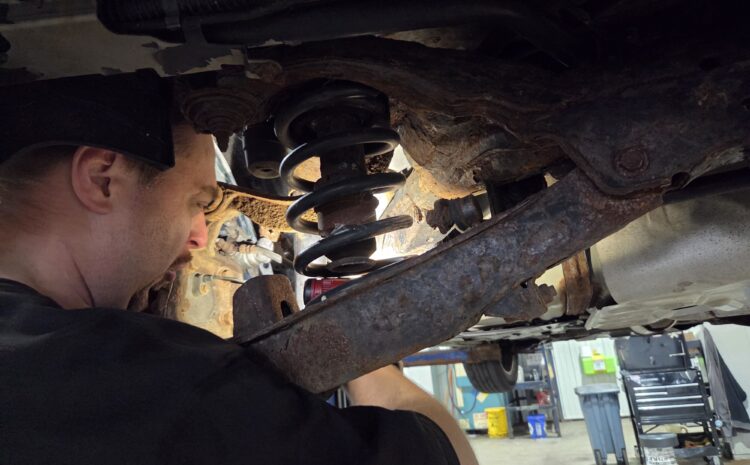
- Suspension parts and fasteners: Rust can affect springs, brackets, and hardware, and may complicate later maintenance or repairs.
- Wheel wells and surrounding panels: Packed slush and salt can collect behind liners and in seams where you might not notice buildup.
Salt damage isn’t always obvious from the outside. A vehicle can look clean while residue remains underneath. The AAA road-deicer fact sheet explains how de-icers can contribute to vehicle rust and corrosion.
3. Warning signs you can watch for
You don’t need to crawl beneath your vehicle to keep an eye out. When it’s parked safely, look for visible clues around the wheels and beneath the body. Never reach under a vehicle supported only by a jack.
Watch for:
- Flaking, bubbling, or scaling rust on visible metal parts
- New fluid spots beneath the vehicle
- A strong fuel smell near your vehicle
- A soft or spongy brake pedal, a brake warning light, or a pedal that feels different than usual
- Unusual exhaust noise or a change in the way your vehicle sounds
- Suspension noises or a new change in how the vehicle rides
A warning sign doesn’t tell you exactly what needs repair, but it does tell you not to ignore the change. If your brake pedal feels soft, a brake warning light comes on, or you suspect a brake-fluid leak, stop driving as soon as it’s safe and arrange professional help. If you smell fuel or see a possible fuel leak, stop safely, switch off the engine, and seek assistance.
4. How to wash salt off during winter
A regular wash can help remove salt before it has time to keep working on exposed metal. Focus on the underbody and wheel wells, not just the paint.

A practical routine during active salt season is to wash the vehicle about every one to two weeks, and sooner after driving through heavy slush or after a major salting event when conditions allow. If you drive less or salt exposure is light, at least a monthly wash is a useful baseline. Consumer Reports also recommends washing during snow season and adjusting frequency based on salt exposure.
Choose a wash that includes an undercarriage rinse. Pay attention to the wheel wells and lower body, where slush can collect. If you use a self-service wand, follow its instructions and avoid spraying close to sensitive electrical connections or seals. At the end of winter, give the underbody and wheel wells a thorough rinse to clear remaining residue.
When temperatures are below freezing, use common sense about timing: water left on the vehicle can freeze. Wash when conditions allow the vehicle to drain and dry, and don’t let a wash replace an inspection if you notice a warning sign.
5. Protective steps, and when to call a professional
Washing helps, but it’s only one part of a winter care routine. A few habits can reduce how long salt sits against your vehicle:
- Clear packed snow and slush from around the wheel wells and lower body when it’s safe to do so.
- Avoid leaving salt-heavy residue in place after repeated trips on treated roads; schedule a rinse when weather permits.
- Keep drain openings clear so water doesn’t collect in places designed to drain.
- Ask about undercoating or protective treatments before applying anything. The right product and application depend on your vehicle’s condition and manufacturer guidance.
- Don’t cover existing rust or leaks. A coating is not a repair for a corroded brake line, damaged fuel component, or weakened metal. Protective products should be applied to appropriate, clean, dry surfaces, not indiscriminately over brake parts or other components.
Most importantly, have a professional inspect the undercarriage periodically, especially before or during salt season if you drive year-round or your vehicle has already seen several Wisconsin winters. A technician can check areas that are hard to see from above, including brake lines, fuel-system components, suspension parts, and the frame.
That matters because brake-line corrosion is a real safety concern. Catching early surface rust or a developing problem gives you a chance to discuss options before a component becomes badly deteriorated. Waiting until a line leaks or a part fails can turn a manageable repair into a more involved and costly one.
If you’re looking for auto repair in Milwaukee or planning car maintenance in Milwaukee, choose a shop that explains what it finds and why a repair is needed. Sanfelippo Auto Repair is a family-owned business with more than 30 years of industry experience. Our ASE-certified technicians service all makes and models, using modern technology to provide dealership-quality care at competitive prices, with an emphasis on honesty and transparency.
Before winter salt has had months to build up, or while the season is underway, ask us to inspect your undercarriage. What does the underside of your vehicle look like after a season on treated roads? Have you noticed a change in braking, a new leak, or an unusual smell? If it’s time for a closer look, contact Sanfelippo Auto Repair or book an appointment. We’re located at 646 S 2nd St UNIT 600, Milwaukee, WI 53204, and serve Milwaukee, WI, and surrounding areas.